

Nineteenth Century Perspectives
The Kingdom of the Happy Land community faced misrepresentation and false rumors from its inception until long after its last resident passed away.
This collection of news articles provides insight into the American cultural climate after the Civil War, a time of profound cultural, economic, and political shifts. Following the war, the federal government occupied the Southern states for twelve years, during a period known as Reconstruction.
This time was marked by widespread anxiety among many white Americans, who feared the social and political changes that emancipation might bring. That anxiety created a hostile atmosphere marked by violence and intimidation.
The "Zion Travelers," who would go on to become the founders of the Kingdom of the Happy Land, are cast in a condescending light in these articles. They are portrayed as gullible and easily swayed under the guidance of a charismatic leader. The narrative built by these unverified accounts escalates and claims that the group engaged in a ritualistic practice of cannibalism. There is no historical evidence or credible source to support this bizarre story. The articles lean into fear-based stereotypes of the time, depicting freedpeople as incapable of self-governance and prone to violence and moral corruption.
Use the arrows to browse the articles, and click on the articles to enlarge.
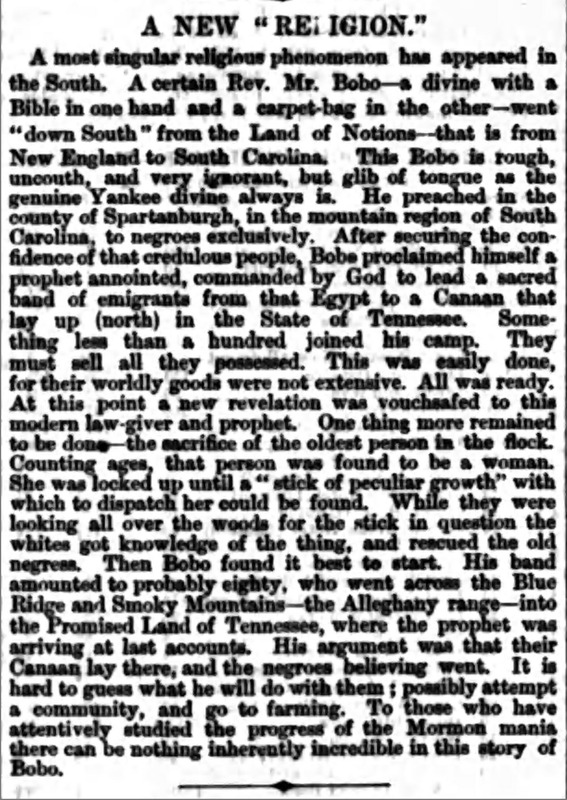

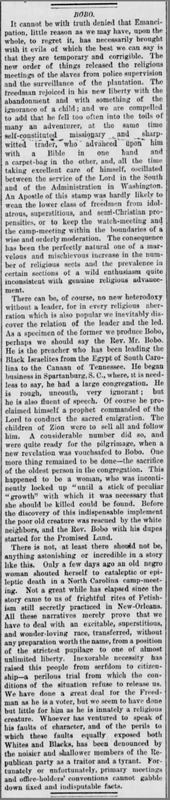
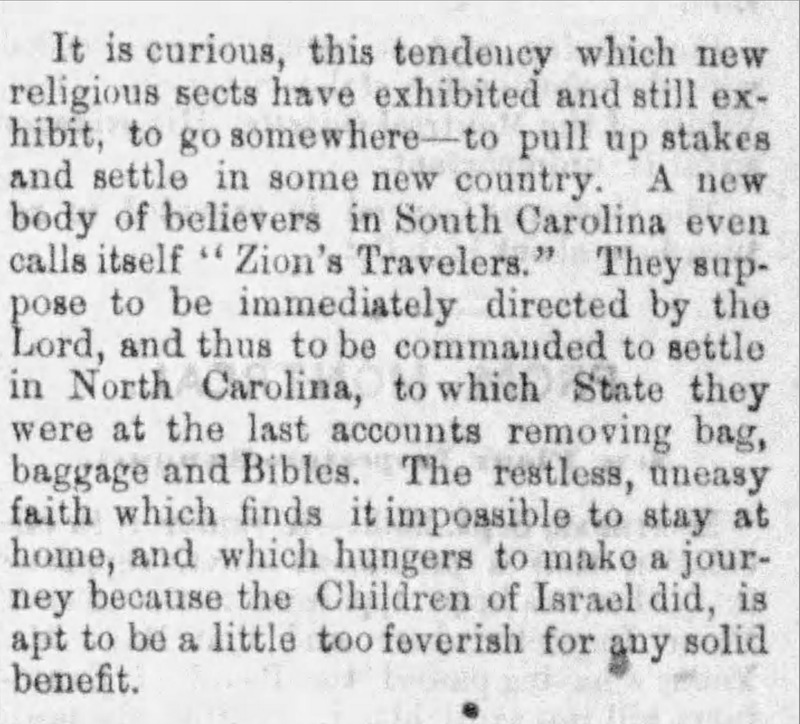
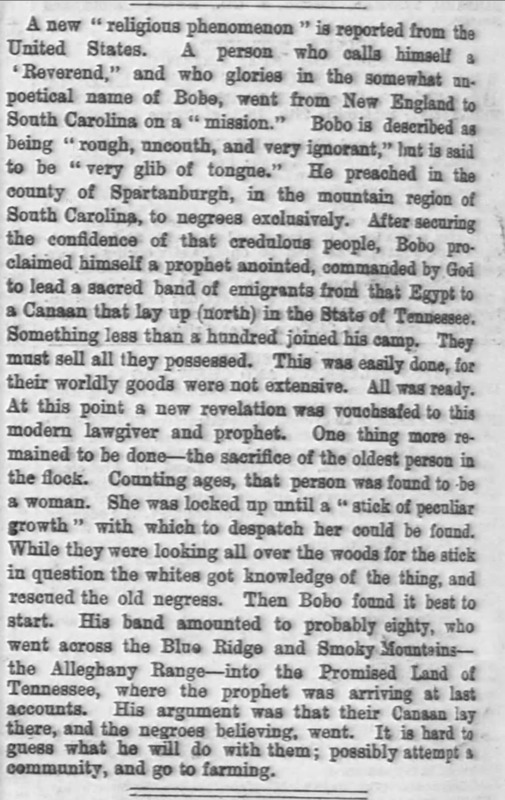
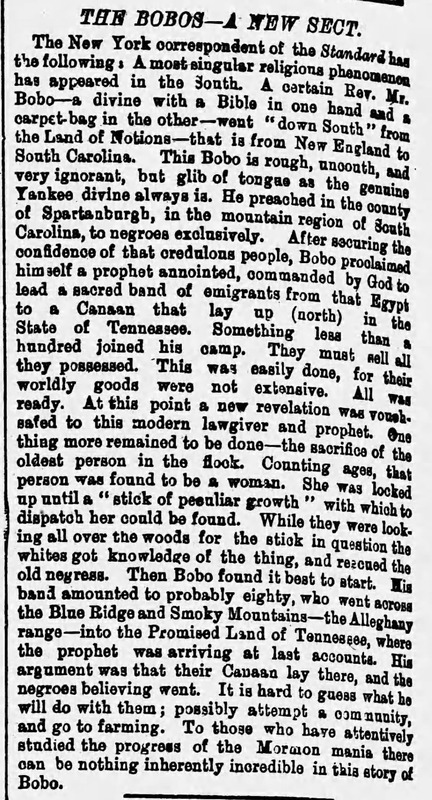
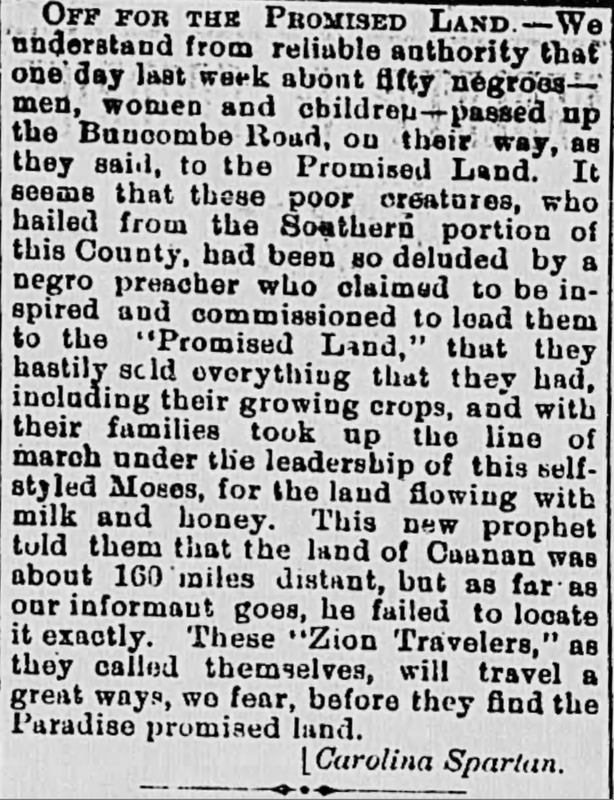
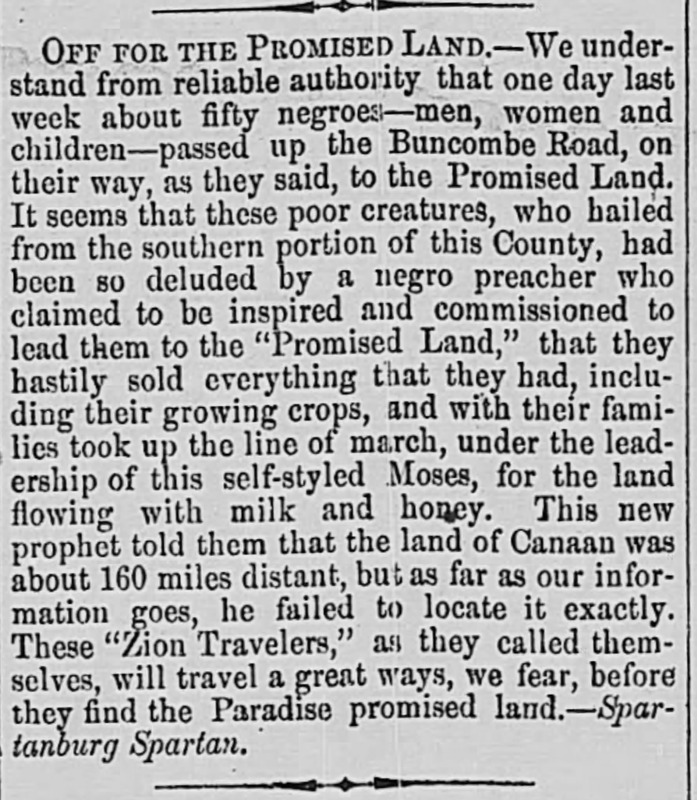
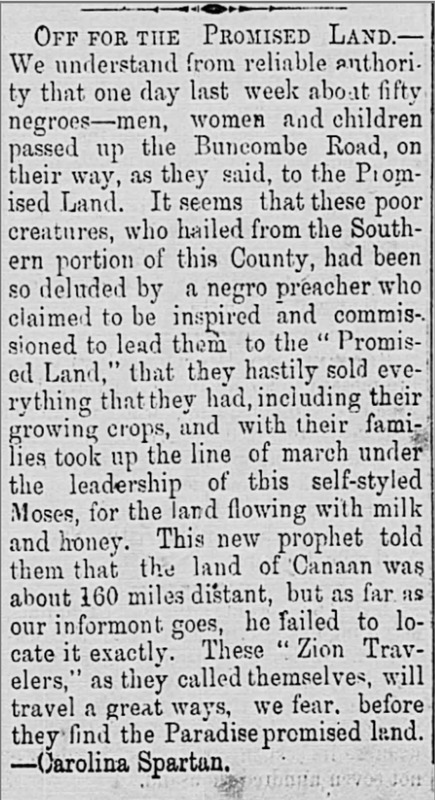

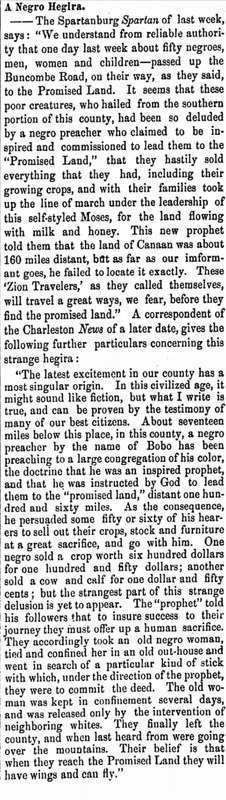
This myth of dangerous, ungovernable African Americans—whose actions required the intervention of benevolent white people—was rooted in white fears and a lack of belief in the humanity and moral integrity of the formerly enslaved.
Such stories reinforced racial anxieties, portraying freedpeople as threats to society and justifying continued control over their lives. While most of these articles were published in South Carolina, where the Zion Travelers originated, some were published as far as New York City and even Bristol, England, indicating that these fears were widespread.