

A New Community
In the Blue Ridge Mountains of Western North Carolina, the Kingdom founders made their new home.
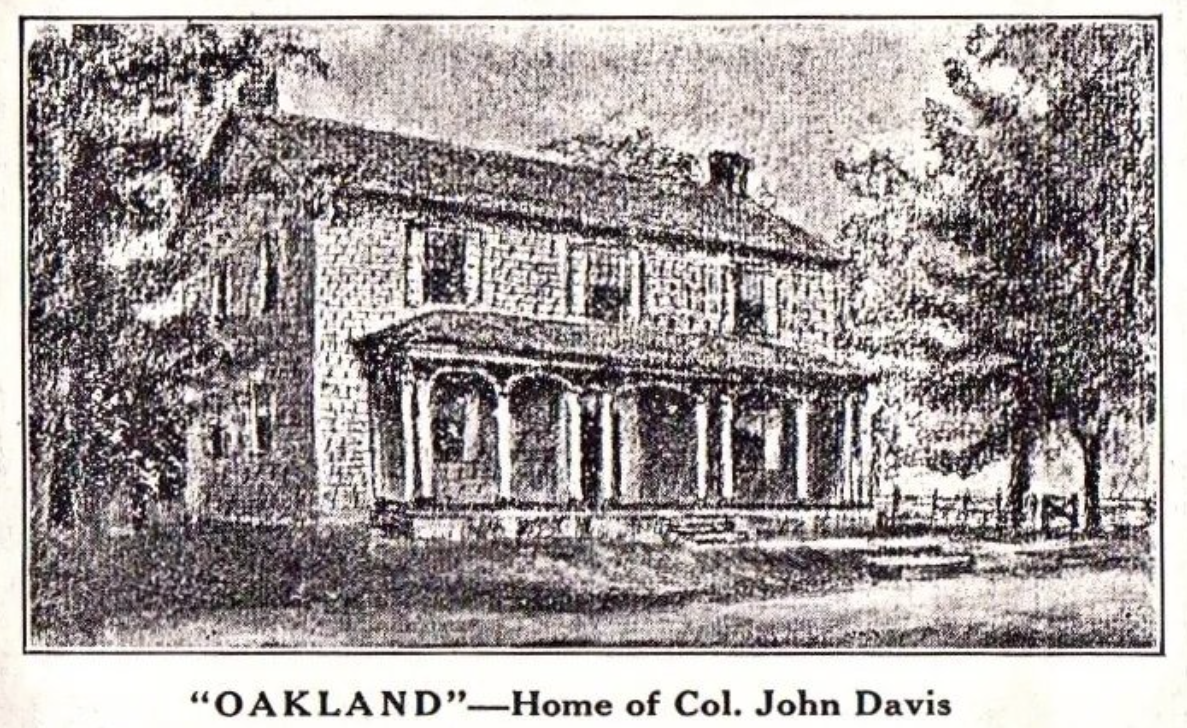
When the travelers arrived in North Carolina, they stayed on the property of the Oakland Inn, a former plantation and lodging on the Buncombe Turnpike. The emancipated Williams family, who would later help found the Kingdom of the Happy Land, also lived there on land owned by Serepta Merritt Davis, a former enslaver and elderly widow.
Eventually, two members of the original group, Luella (Bobo) Montgomery and her brother-in-law Robert Montgomery, were able to purchase land adjacent to the Oakland Inn. They purchased the property from Serepta Davis' son-in-law, and it straddled the border between North and South Carolina. This is reflected in the 1880 census, where some Kingdom founders were listed in Green River Township, Henderson County, North Carolina, and others in Saluda Township, Greenville County, South Carolina.
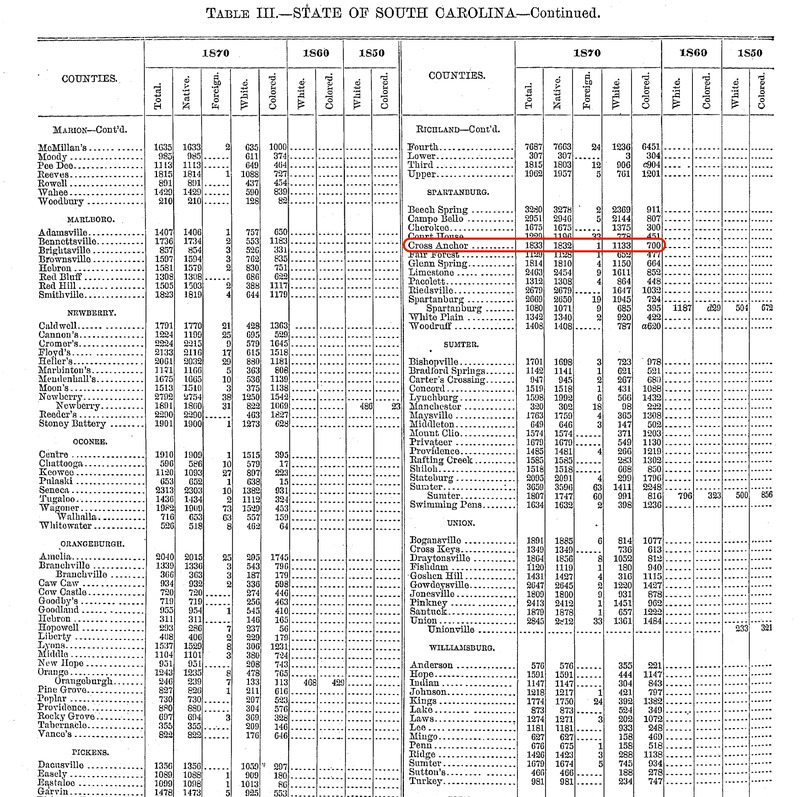
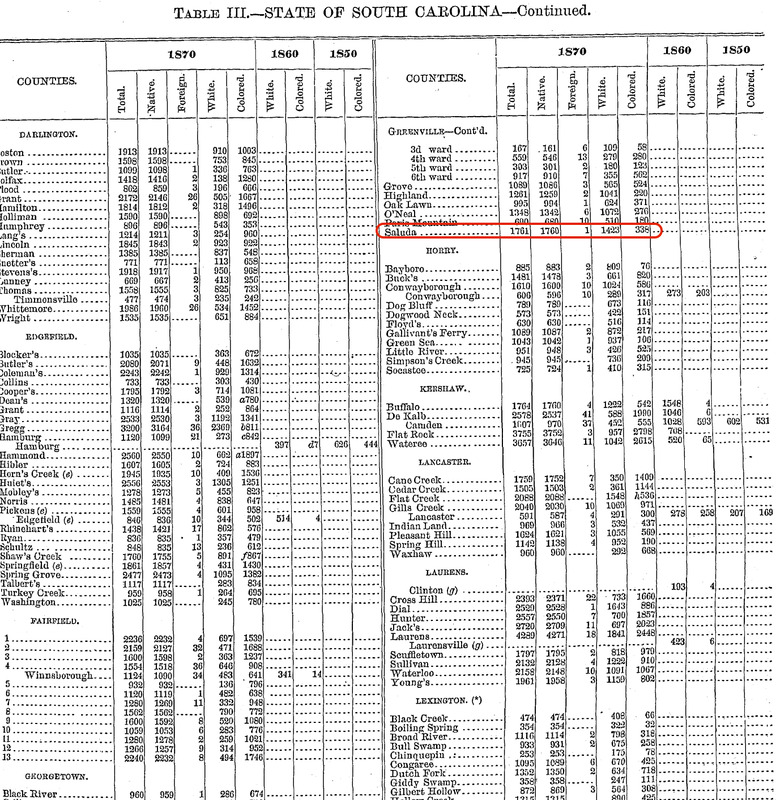
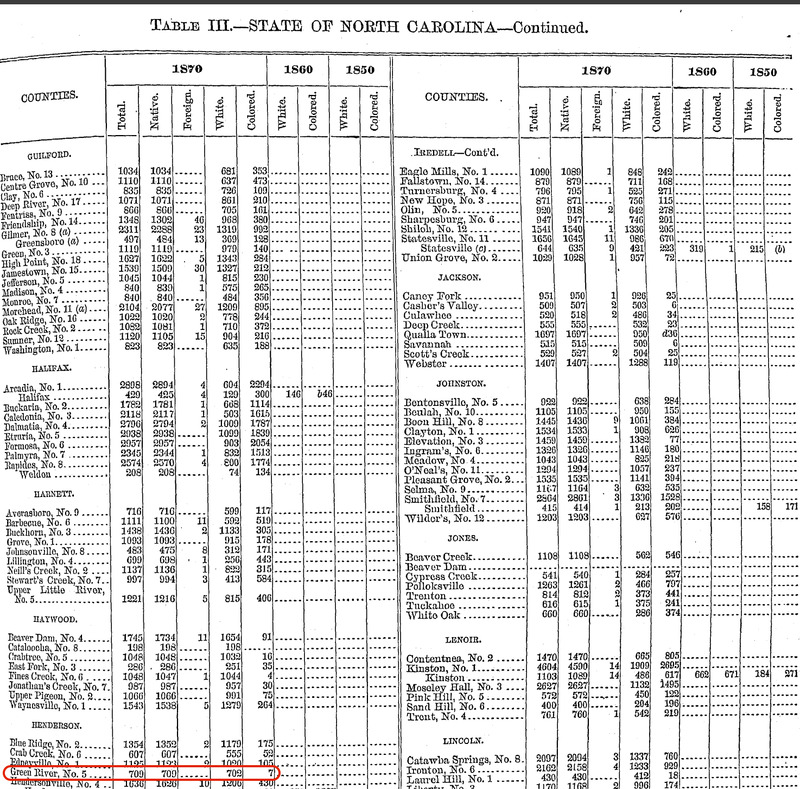
Cross Anchor and the Kingdom of the Happy Land were both rural but they were culturally and demographically different. In 1870, Cross Anchor had 700 residents of African descent, about 40% of the population. In Saluda Township, there were 338, or 20%, and in Green River Township, only seven, nearly 1%.
Use the arrows to view demographic data in Cross Anchor and the Kingdom in 1870.
The descendants and founders of the Kingdom of the Happy Land were entrenched in African American communities throughout western North Carolina. The map below shows census locations for some of the founders between 1870 and 1930.
By 1880 many founders appeared on censuses in, or near, Western North Carolina. The Bobo and Whitmire families moved on deeper into the Blue Ridge Mountains and established a home in Jackson County, North Carolina, where they stayed for generations.
Later, other Happy Land descendants left the Kingdom and moved to nearby towns, especially population centers like Hendersonville.
The numbers on the map indicate the household locations of the Kingdom founders. Click on them to see each record at the location.