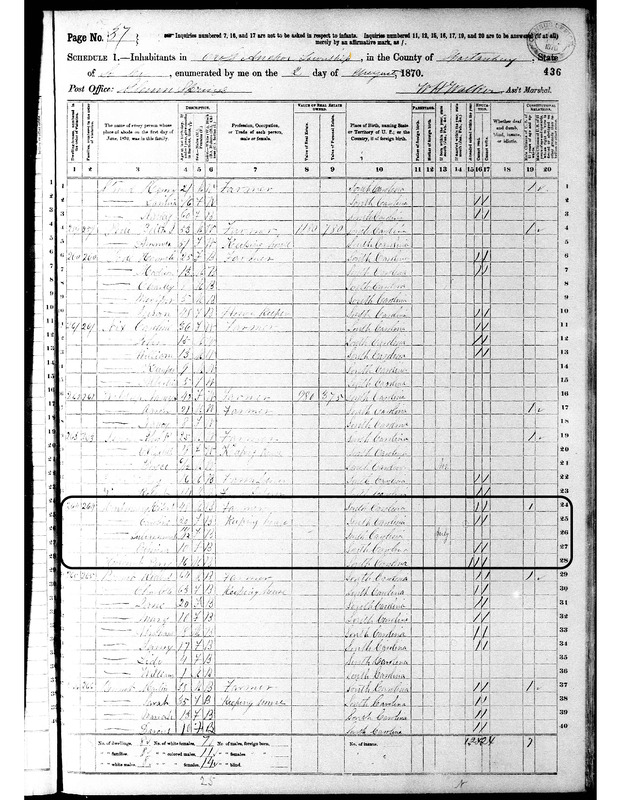
The household of Robert and Caroline Montgomery as it is enumerated on the 1870 census in Cross Anchor Township, South Carolina. Also lited in this household are Juliannah and Elmira Montgomery; and Perry Holcomb.
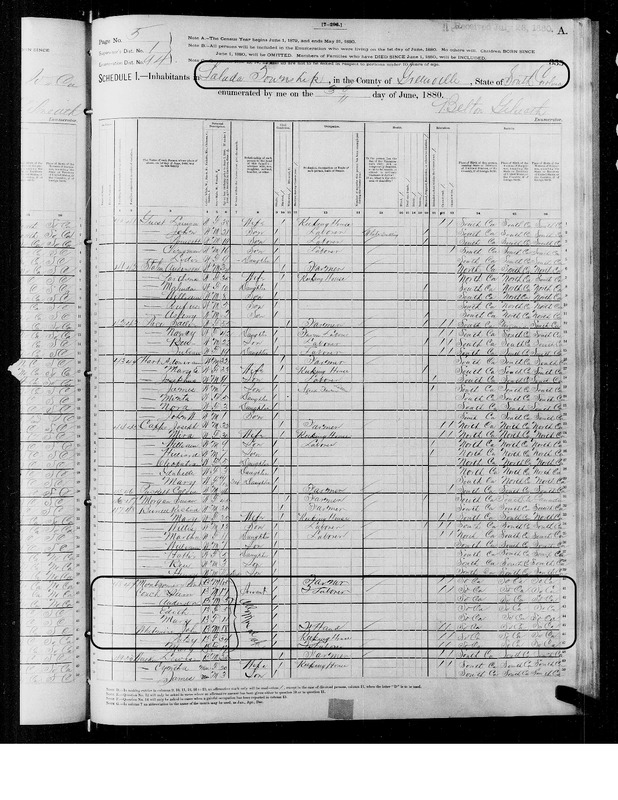
Census enumeration of Robert Montgomery's household in Saluda Township, Greenville County, South Carolina in 1880. The census shows Montgomery living with several founders of the Kingdom of the Happy Land. The census taker noted that this group of families was "All mixed up,"indicating that they were living in some sort of alternative arrangement.
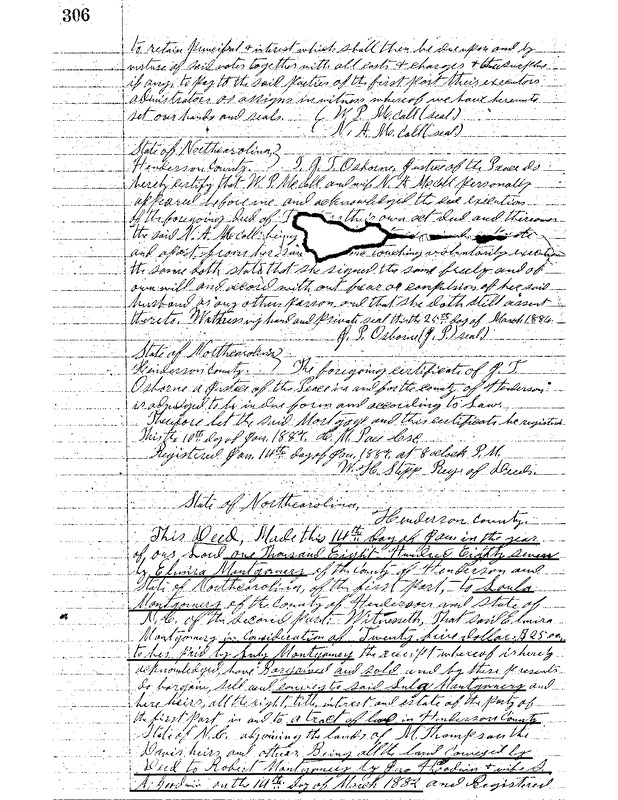
Elmira Montgomery, Robert Montgomery’s oldest daughter, transferred one-fourth of Robert Montgomery’s land to Louella Montgomery, Robert’s sister-in-law and Queen of the Kingdom of Happy Land, for $25. The land is described as an “undivided one-fourth part of the land” that Robert originally purchased in 1882. Robert Montgomery had four children. Presumably, he had died by this time, and Elmira had inherited one-quarter of the 150 acres he purchased in 1882. The deed does not provide details about the specific location of the land other than to say that it bordered the land of M. Thompson, the Davis heirs, and others.
The transaction was attested to by a “W. S. Mongomery”, who was undoubtedly William Montgomery, Louella’s husband, and Robert’s brother.
Two court orders committing Sarah Bennett to the state mental hospital at Goldsboro, N.C., in 1914 and 1919, and one letter recommending her release two years after her first committal to the hospital.
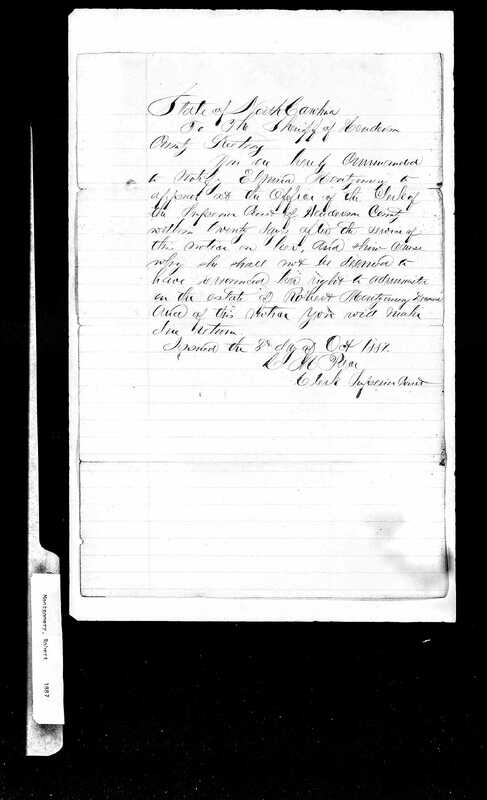
C.M. Pace, Clerk of the Henderson County Superior Court, commanded the County Sheriff to notify Elmira Montgomery that she was to appear at the Court within 20 days of the day she received notification “and show cause why she shall not be deemed to have renounced her right to administer the Estate of Robert Montgomery.”
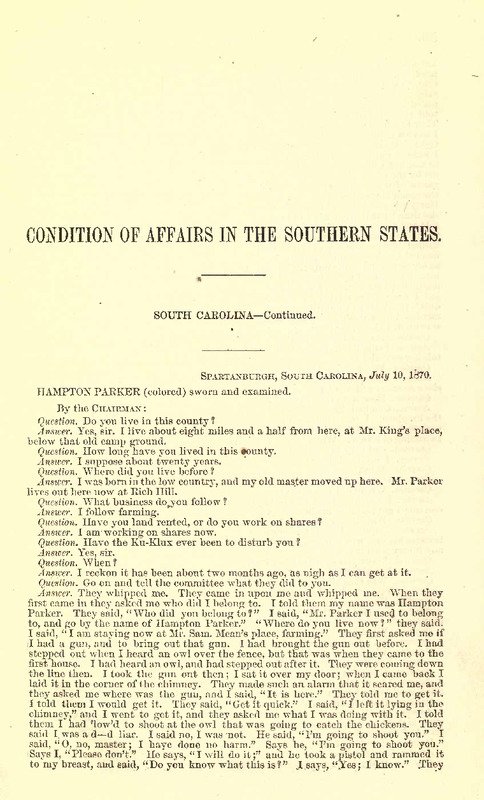
A thirteen-volume congressional testimony investigating the presence and activity of the Ku Klux Klan in Alabama, Georgia, Mississippi, North Carolina, South Carolina, and Florida since emancipation.
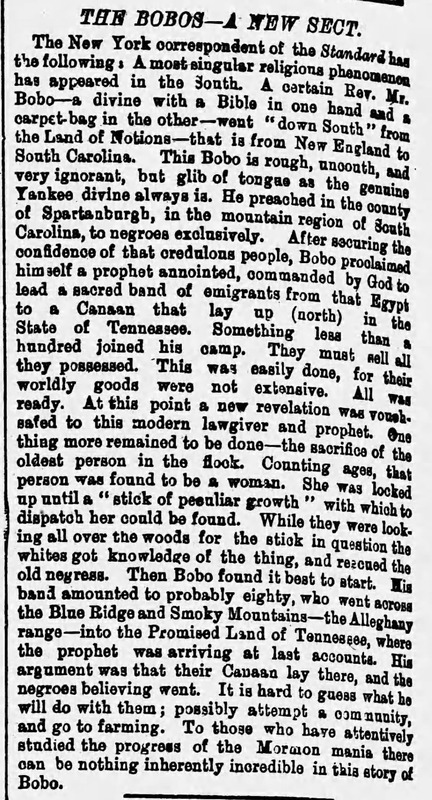
This article mirrors previous narratives about the Kingdom of the Happy Land but stands out for comparing the group to Mormonism, a rapidly growing Christian sect founded 40 years earlier. Like other accounts, it casts Reverend Bobo as a manipulative figure, falsely claiming he came to South Carolina from New England, and misidentifies the group's destination as Tennessee. The article again portrays the followers as "credulous" and easily duped, while framing the surrounding white community as heroic figures. The narrative reinforces the stereotype of gullible Black congregants being led astray by a deceitful leader, perpetuating themes of manipulation and racial inferiority.
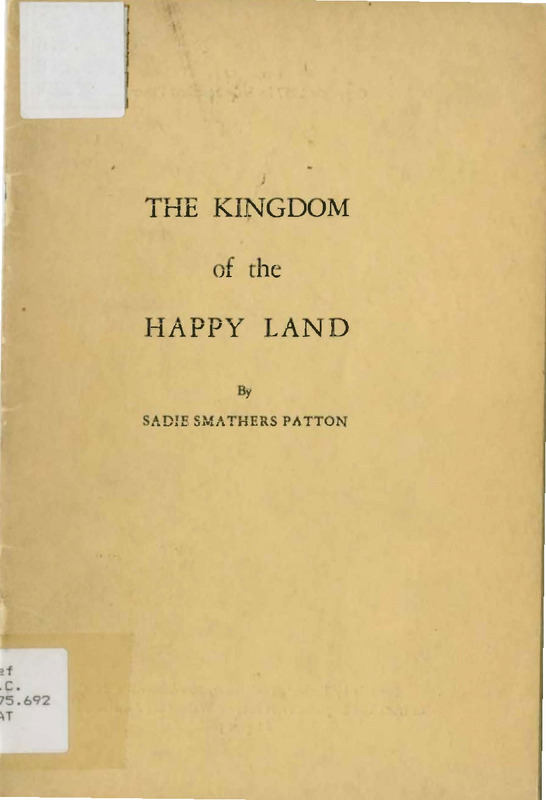
A short booklet written and self-published by Sadie Smathers Patton about the Kingdom of the Happy Land. Her sources are primarily oral and community histories, some of which can be verified, but are mostly not supported by primary sources.
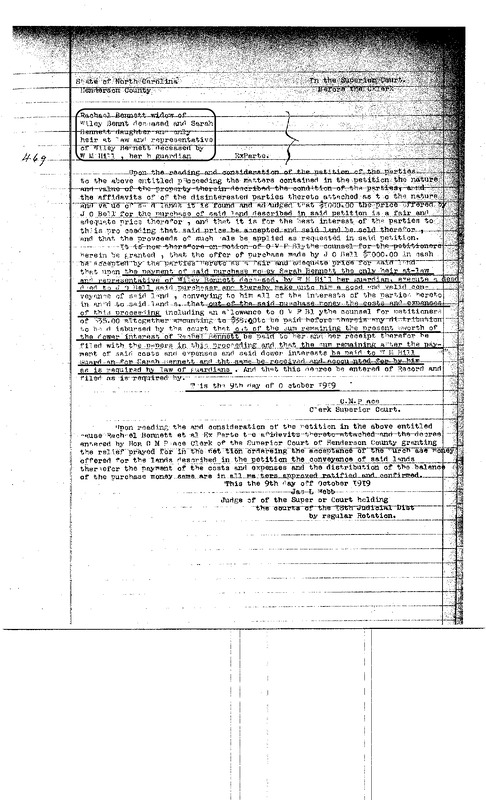
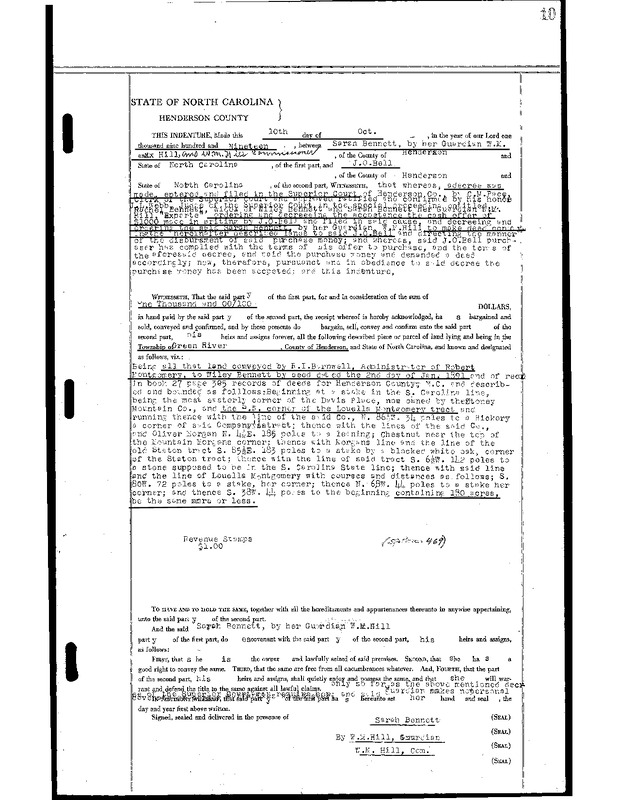
180 acres of land was sold from the estate of Wiley Bennett to J.O. Bell for $1,000. Judge J.L Webb ordered the sale in response to an offer of $1,000 by Bell. The timing of the court proceedings is not clear, however, Bell made an offer for the land. The Clerk of the Court, C. M Pace, then prepared a decree entitled “Rachel Bennett, widow of Wiley Bennett, and Sarah Bennett, W. M. Hill Guardian ‘Exparte’ which was approved by the Judge. The Judge then ordered and decreed that Bell’s offer be accepted.
The decree said that Hill was to “direct the manner of disbursement of said purchase money.” He used the money to establish a trust for Rachel Bennett, Wily Bennett's spouse, and their daughter Sarah Bennett, who was a patient at the state mental hospital for many years.
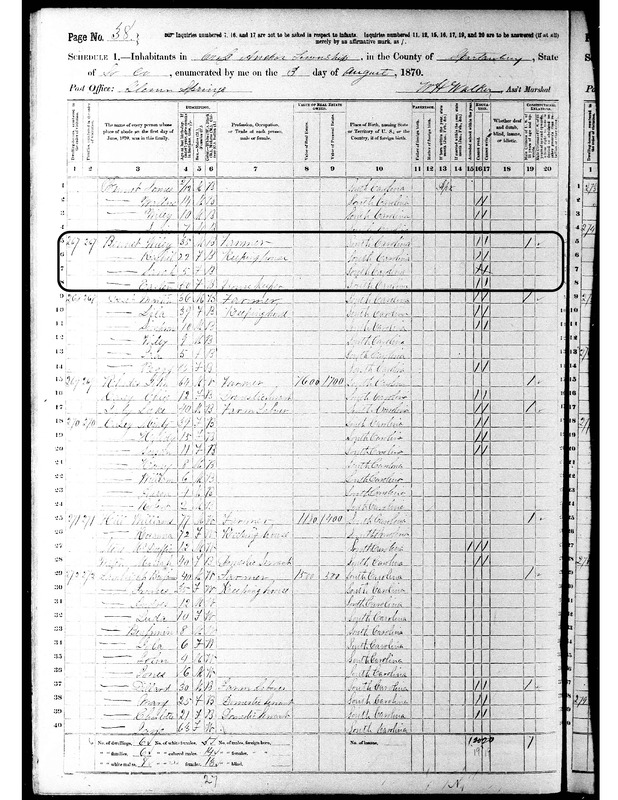
The household of Wiley and Rachel Bennet as it is listed on the 1870 census, in Cross Anchor Township, South Carolina. Also listed in this household are Sarah and Easter Bennet.
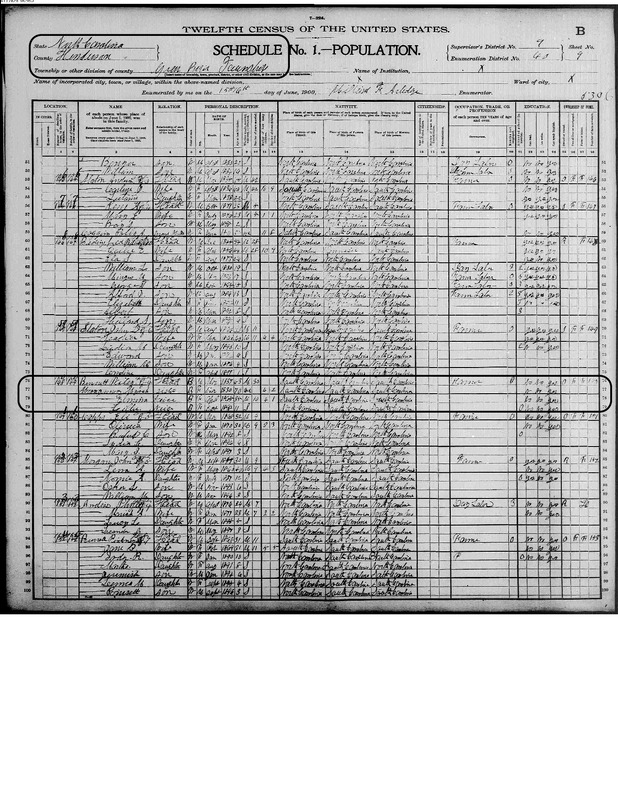
The household of Wiley Bennet and Myrah Montgomery as it is listed on the 1900 census, in Green River Township, North Carolina. This census shows that Myrah Montgomery is Wiley Bennet's sister, meaning that Bennett must also be siblings with William and Robert Montgomery. Elmira and Gillie Montgomery are also listed as nieces to Wiley Bennett.
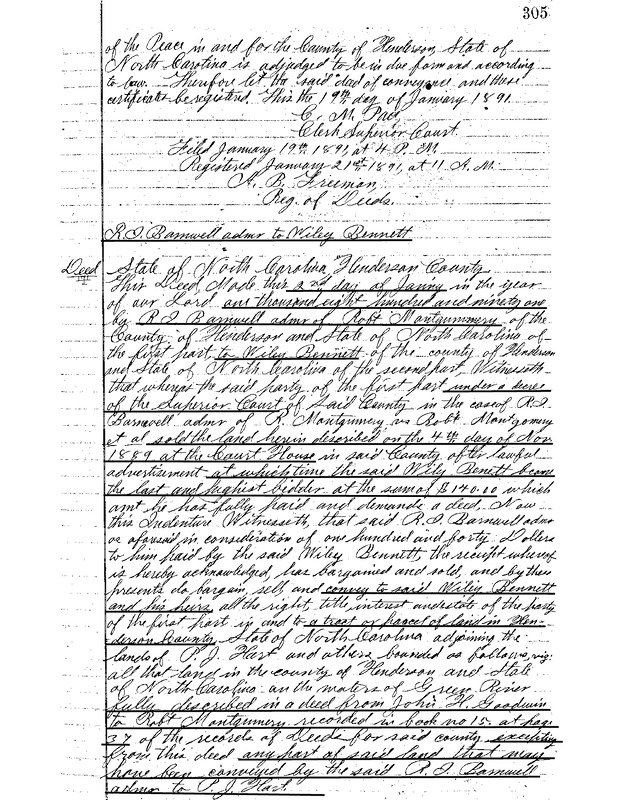
A deed was prepared to transfer land from the estate of Robert Montgomery to Wiley Bennett. R. I. Barnwell was the administrator of the estate. According to the entry, there had been a sale of Montgomery’s property on November 4, 1889, at the Courthouse. Wiley Bennett was “the last and highest bidder at a sum of $140.” The amount of land is not specified other than to say that it included all the land purchased by Robert Montgomery from the Goodwins “excepting from this deed any part of said land that may have been conveyed by the said R. I. Barnwell Administrator to P. J. Hart.”
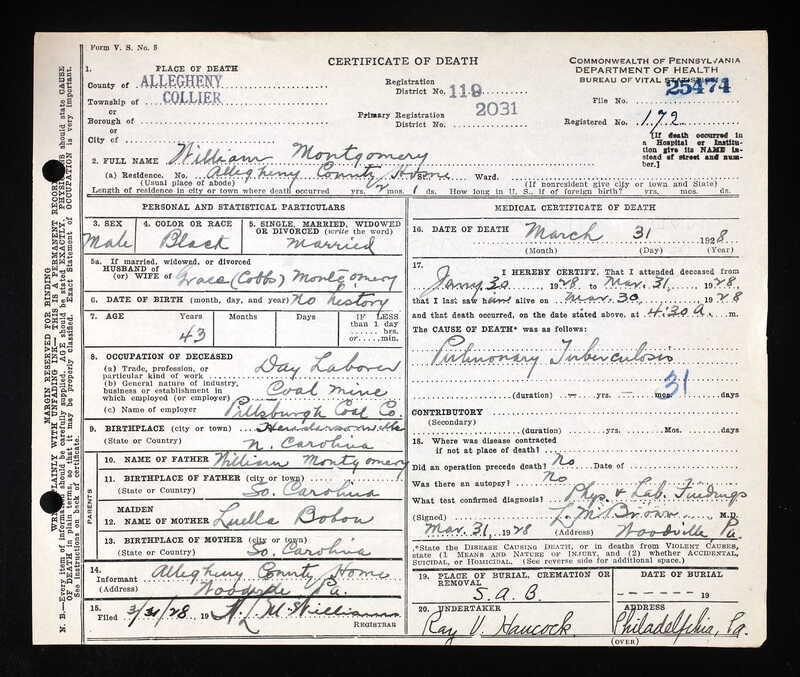
Death certificate for William Montgomery, Jr. The certificate names William Montgomery and Louella Bobo as his parents, and his wife as Grace Cobbs Montgomery. It also identifies the decedent as a coal miner who died in the Alleghany County Home of Pulmonary Tuberculosis.
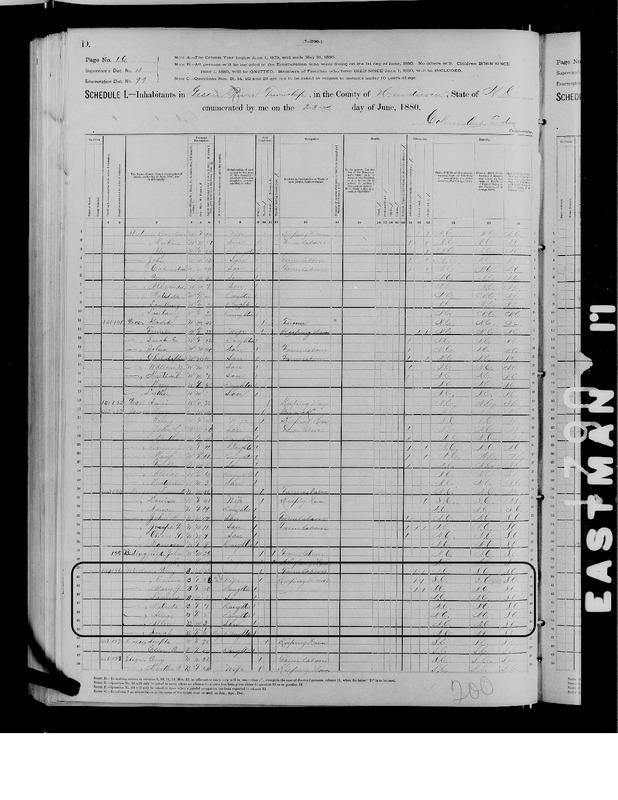
The household of Perry and Emma (Amy) Williams, as it appears on the 1880 census, in Green River Township, Henderson County, North Carolina. Also listed in this household are Mary J., Lawrence, Matilda, Alice, Allen, and Sarah.
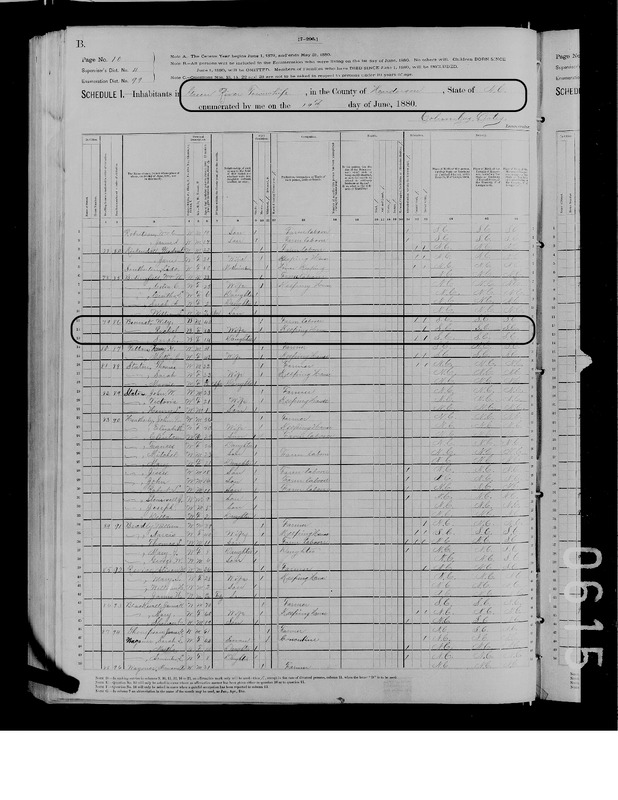
The household of Wily and Rachel Bennet as it is listed on the 1880 census, in Green River Township, North Carolina. Also listed in this household is Sarah Bennet.
This article is a racially charged narrative aimed at discrediting the founders of the Kingdom of the Happy Land and their spiritual practices. It portrays formerly enslaved individuals as gullible and easily manipulated, particularly by figures like Hal Whitmire and Lou Bobo, who are depicted as leaders of a mystic, dangerous group - Zion's Travelers. The story sensationalizes an attempted murder by crucifixion and frames a white man as the rescuer, reinforcing the idea that Black people need white oversight. It also falsely claims that the group planned to murder a fellow Black man, Silas Norman, and ends with an accusation of cannibalism, painting the group as savage. This depicts Black leadership as unstable and immoral and reinforces ideas that emancipated people are dependent on their former enslavers for safety and civility.