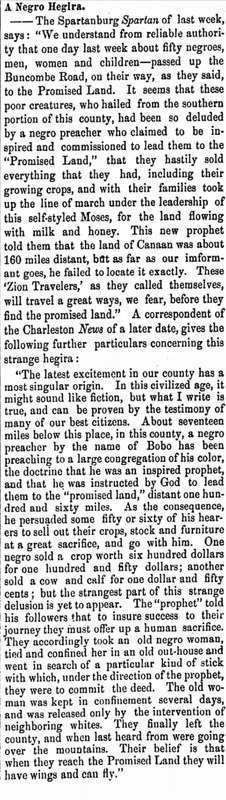
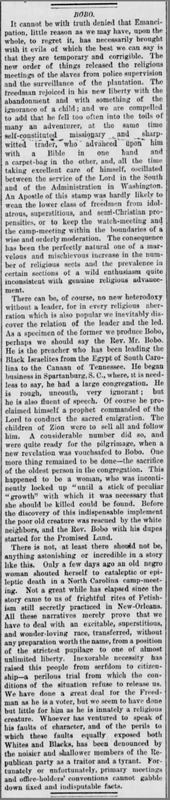
This article, reprinted across multiple newspapers, speculates that Reverend Bobo is a religious zealot who has brainwashed his followers. It recounts an unsubstantiated story of a kidnapping and an alleged plan to murder an elderly Black woman, again casting the local white community as heroes who intervene to save her. The article also includes the fantastical claim that the Zion Travelers believed they would gain the ability to fly once they reached the "promised land." These sensationalized details reinforce the narrative of gullible Black followers under the influence of a dangerous and deluded leader while positioning the white community as protectors of order and rationality.
This article, reprinted across multiple newspapers, speculates that Reverend Bobo is a religious zealot who has brainwashed his followers. It recounts an unsubstantiated story of a kidnapping and an alleged plan to murder an elderly Black woman, again casting the local white community as heroes who intervene to save her. The article also includes the fantastical claim that the Zion Travelers believed they would gain the ability to fly once they reached the "promised land." These sensationalized details reinforce the narrative of gullible Black followers under the influence of a dangerous and deluded leader while positioning the white community as protectors of order and rationality.
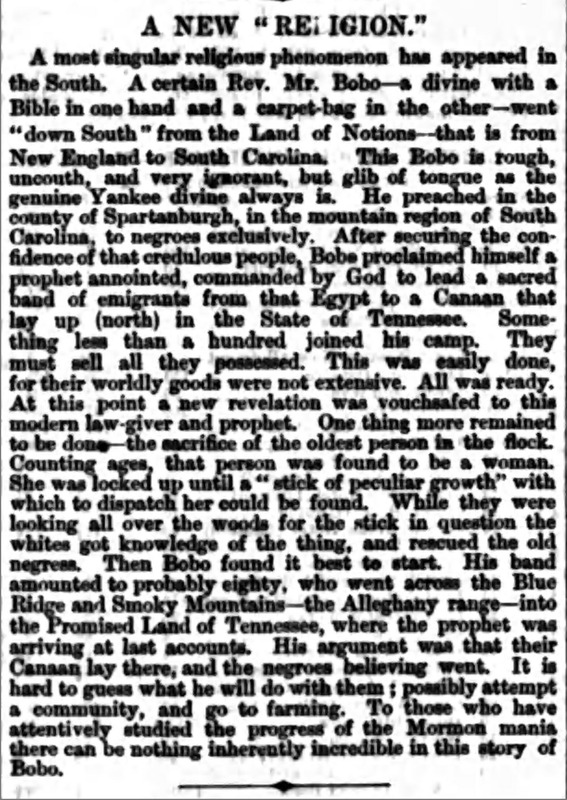
This newspaper article from Bristol, England, portrays the Kingdom of the Happy Land founders as gullible followers led astray by Reverend Bobo, a manipulative "carpetbagger." It falsely claims the group was journeying to Tennessee and that Reverend Bobo had convinced his followers to commit murder. The article casts the surrounding white community as heroes who rescued the purported victim, further reinforcing the stereotype of Black people as easily exploited and in need of white intervention. The narrative aims to discredit Bobo's leadership and frame the group’s spiritual journey as dangerous and misguided.
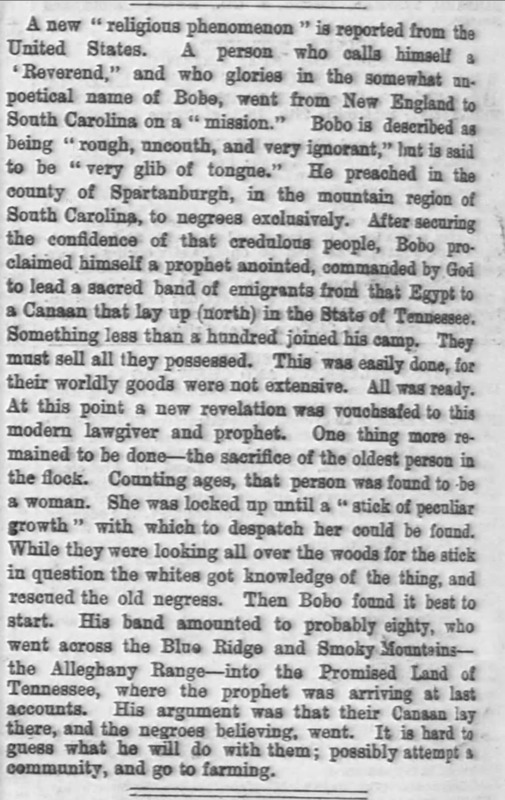
This article mirrors previous narratives about the Kingdom of the Happy Land. Like other accounts, it casts Reverend Bobo as a manipulative figure, falsely claiming he came to South Carolina from New England, and misidentifies the group's destination as Tennessee. The article again portrays the followers as "credulous" and easily duped, while framing the surrounding white community as heroic figures. The narrative reinforces the stereotype of gullible Black congregants being led astray by a deceitful leader, perpetuating themes of manipulation and racial inferiority.
This article condemns emancipation, portraying emancipated Black people as naive and "semi-Christian." Reverend Bobo is labeled a "carpetbagger" and a predator, falsely leading his followers to Tennessee. The article calls his followers "dupes," implying they are easily deceived. It recounts a sensationalized story of an attempted sacrificial murder, positioning white citizens as heroes who intervene. The article also alludes to secretive and "frightful rites of Fetishism practiced in New Orleans. It ends by warning of the dangers of emancipation, reinforcing racist stereotypes about Black people’s supposed inability to self-govern and the moral peril of their newfound freedom.
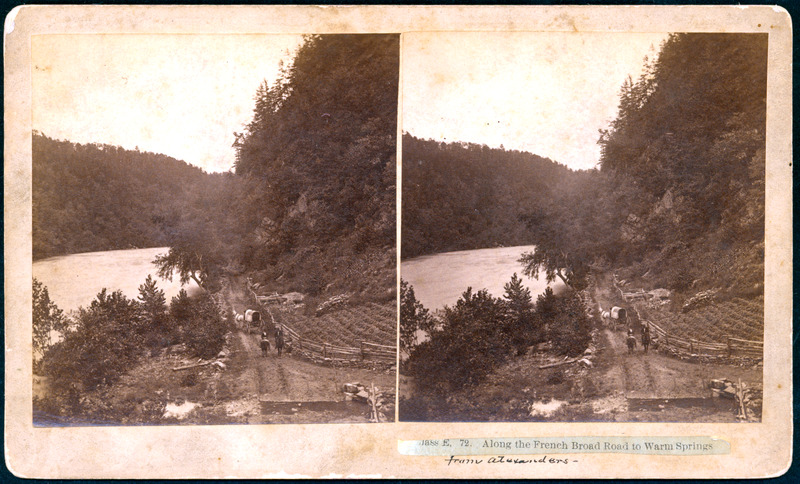
"Along the French Broad Road to Warm Springs" from Alexander's Inn on the Buncombe Turnpike in Buncombe County. Dirt road with a two-horse-drawn wagon on the right. By Taylor & Jones, Land of the Sky, Beauties of WNC, Class E, Views along the French Broad River, #72.
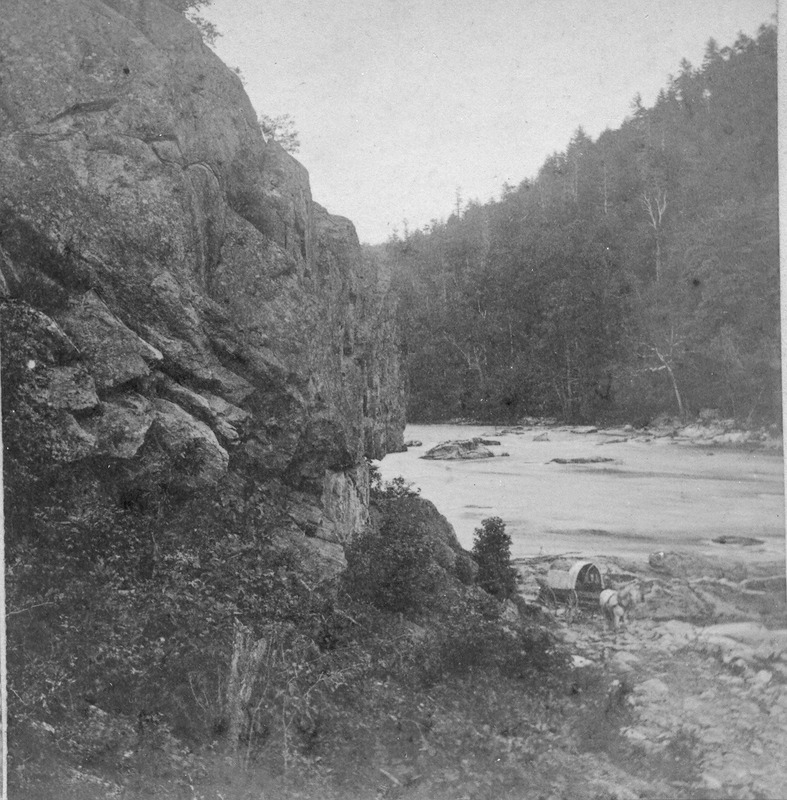
"A Rock Cliff on French Broad," with a covered wagon on the Buncombe Turnpike. By Taylor & Jones, Land of the Sky, Beauties of WNC, Class E, Views along the French Broad River, #74.
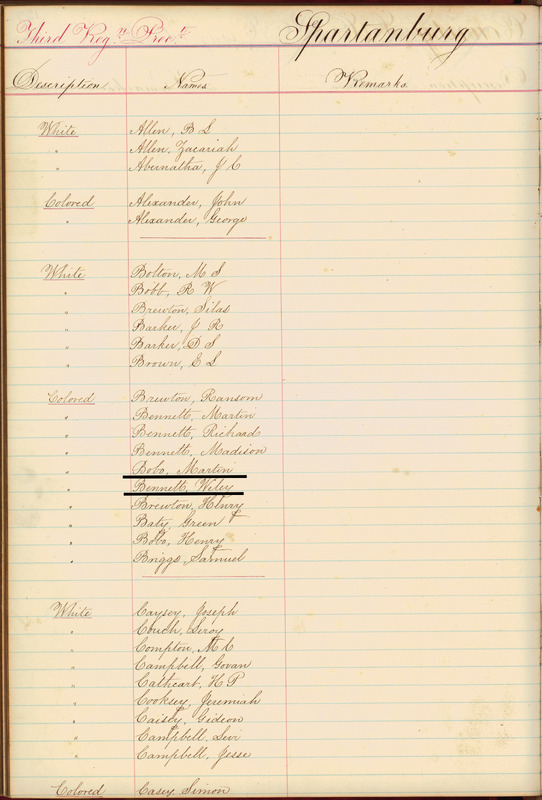
The voter registration records from the Cross Anchor voting precinct of Spartanburg County, South Carolina in the first year African American men in the United States were able to vote.
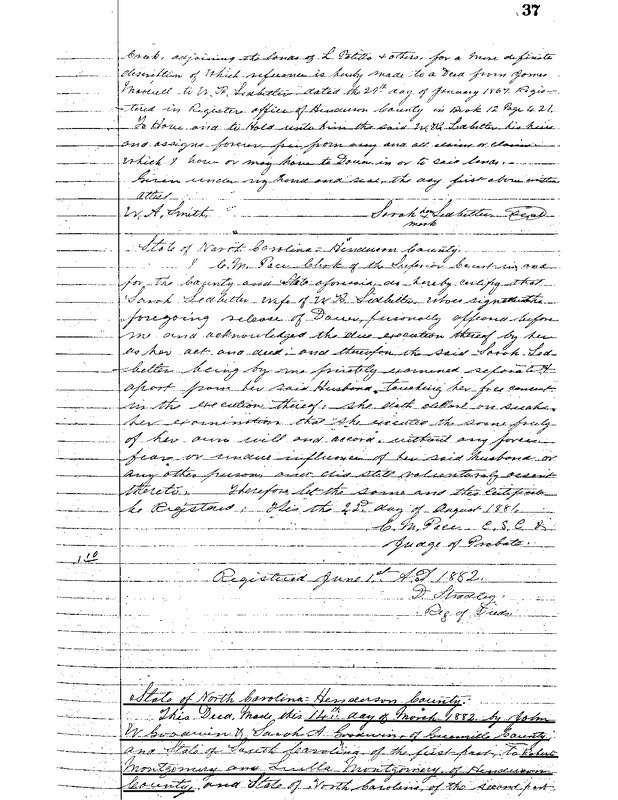
The deed conveys a total of 210 acres, more or less, to Robert and Luella Montgomery for $200 from John W. and Sarah A. Goodwin. The deed stipulated that 75 of the acres are within Greenville County, South Carolina, and are conveyed to Luella Montgomery. One hundred and thirty acres are within Henderson County, North Carolina, and are conveyed to Robert Montgomery.
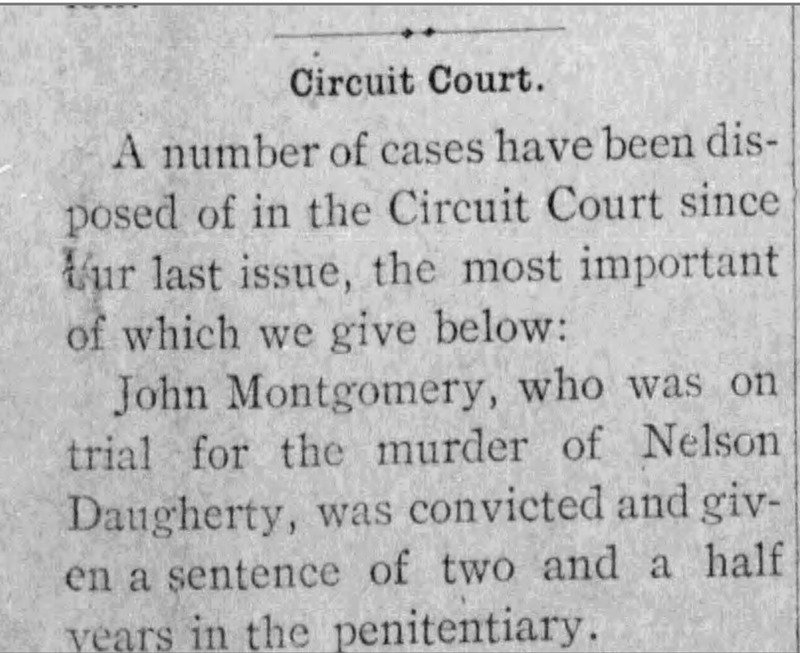
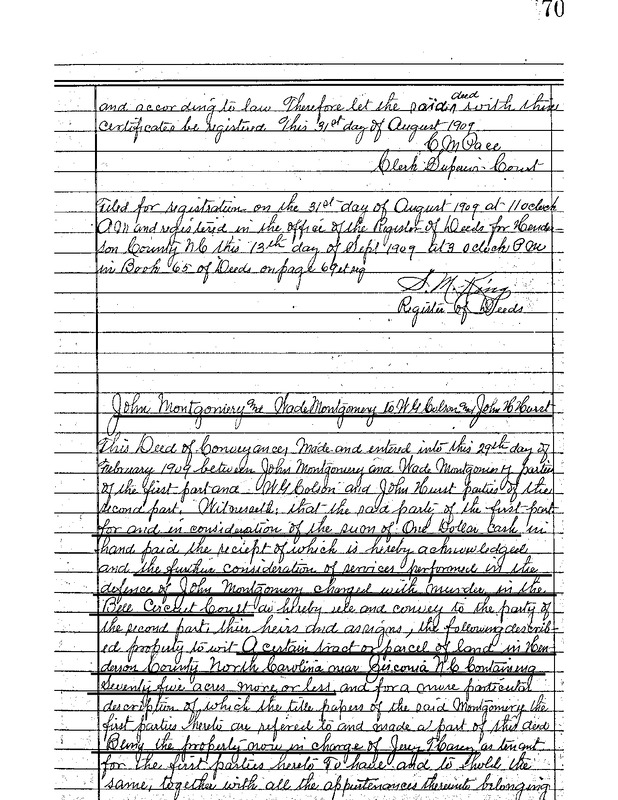
This deed transfers 75 acres of Kingdom of the Happy Land property in Henderson County, North Carolina, from John and Wade Montgomery, sons of Luella Montgomery, to W.G. Colson and John H. Hurst of Bell County, Kentucky, for the defense of John Montgomery, who was accused of murder.
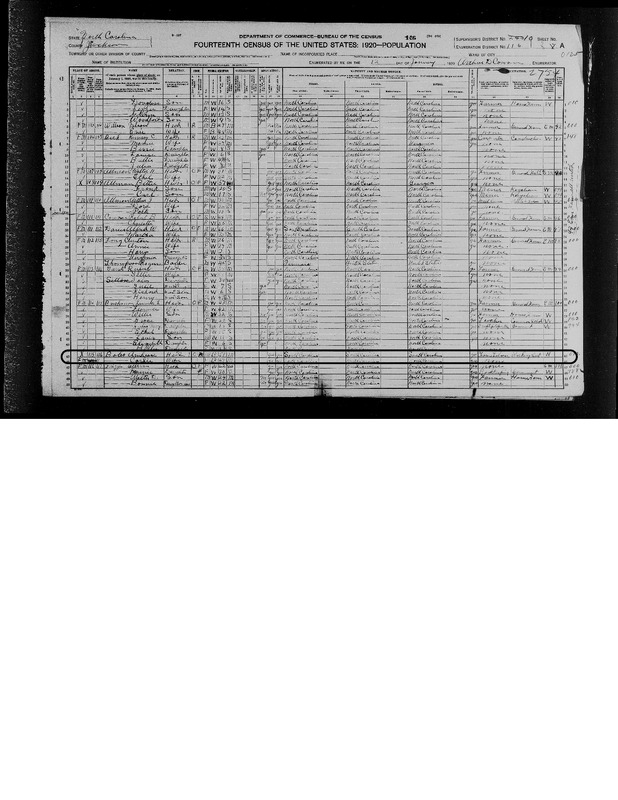
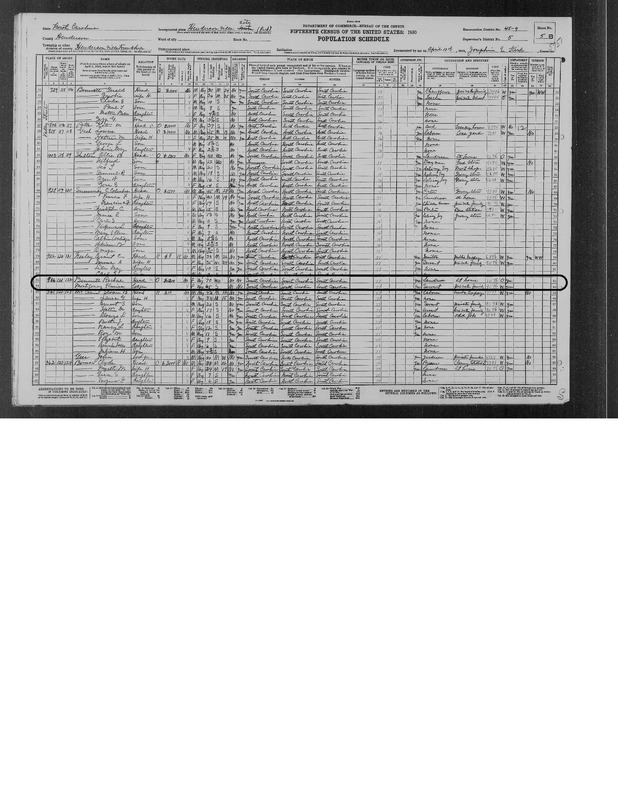
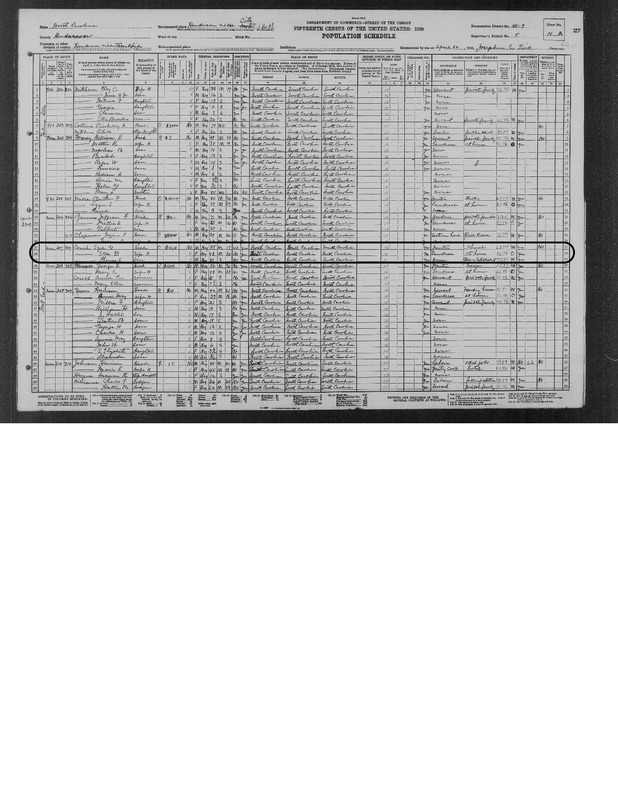
The household of Ezel and Ella Couch as it is enumerated on the 1930 census in Hendersonville, North Carolina. Also lited in this household is Thomas E. Couch/